Built, not advised
He developed the application himself. The technical decisions, the architecture and the integration work were his to answer for.
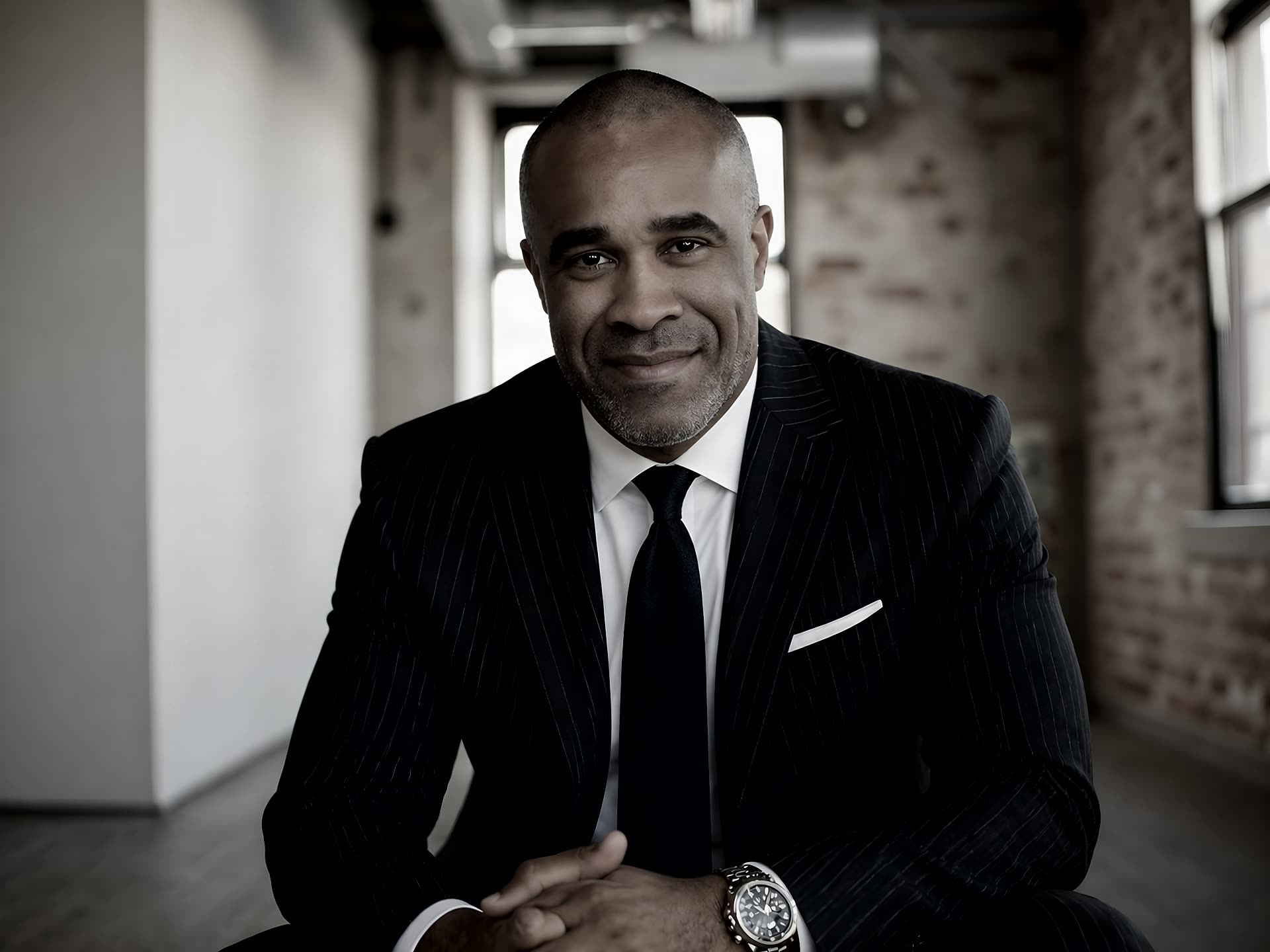
He builds AI systems for a living, then teaches your organization how to do the same. No hype, no forecast, no six-figure pilot that goes nowhere.
CEO of BotMakers, Inc., a division of publicly traded BioQuest (BQST). He speaks from inside live deployments, not a slide deck about them.
Every talk comes out of a deployment that had to survive procurement, a skeptical staff and a CFO asking what it returned.
Trent T. Daniel is the CEO of BotMakers, Inc., a division of publicly traded BioQuest, Inc. (BQST), a published author and a former Houston morning radio host who has built brands into 3,000+ Walmart stores and closed a multi-million dollar enterprise agreement with Zinnia. He educates C-suite executives, boards and the teams who carry the work on what proper AI adoption looks like, and on how to spot the gimmicks and industry traps that consume budgets and produce nothing.
Read the full storyHe built the application, then closed a multi-year, multi-million dollar agreement with one of the largest platforms in life and annuity.
Zinnia is the technology platform at the center of the United States life and annuity market. More than 100 carriers and 2,500 distributor organizations run on it. Eight of the ten leading banks use it. Over half of all US annuity digital sales through broker-dealers move through it, and it supports more than $193 billion in annuity sales. It is not a company that buys software casually.
Trent developed the application and secured a multi-year, multi-million dollar agreement with Zinnia. That engagement is the clearest evidence behind everything he teaches: he did not advise on enterprise software from the outside, he built a product that survived the procurement, security and integration standards of an institution processing hundreds of thousands of transactions a year, and he negotiated the commercial terms himself.
He developed the application himself. The technical decisions, the architecture and the integration work were his to answer for.
A platform at Zinnia's scale subjects a vendor to security review, compliance requirements and operational standards most software never faces.
Not a pilot, not a proof of concept. A commercial agreement with term and value attached.
Product and commercial in the same pair of hands, which is exactly the vantage point he teaches executives to evaluate vendors from.
This is why the room listens. When Trent tells an executive committee how a vendor evaluation actually works, or what an enterprise buyer will demand before signing, he is describing a process he has been through from the other side and won.
Most AI speakers have never had to defend a budget, refuse a vendor, or explain a failed pilot to people who report to them.
As a chief executive Trent has approved AI spend, killed projects that were not working, and answered for both decisions. He knows what an executive actually needs to hear before committing capital, because he has been the one committing it.
He developed an application and closed a multi-year, multi-million dollar agreement with Zinnia, the platform behind over $193 billion in annuity sales. He knows what is genuinely hard, what vendors describe as hard to justify a price, and what is now trivial.
He has sat through hundreds of vendor demos and recognizes the patterns: the engineered dataset, the metric with no denominator, the pilot with no exit. He teaches executives to see them too.
He has trained rooms from the executive committee to the front desk, and adjusts entirely to the level in front of him. Boards get governance and capital discipline. Teams get hands on the tools and permission to stop doing the busywork.
Six topics, each shaped by work Trent has actually done. Every one can run as a keynote, a workshop or a closed-door executive session, and all of them get tailored to your audience before the event.
Most AI strategy fails in the boardroom, not the server room. Leaders approve initiatives they cannot evaluate, then wonder why the results never arrive.
02Organizations do not fail at AI because the technology is not ready. They fail because they chose a problem that could not show a result before the sponsor lost patience.
03The question is not whether AI takes your job. It is which parts of your job were never worth your attention in the first place.
04Nonprofits are told AI is for enterprises with innovation budgets. The opposite is true. The fewer people you have, the more every recovered hour is worth.
05Every AI decision reduces to three choices. Most organizations pick wrong because they evaluate the demo instead of the decision.
06The organizations with the most to gain from AI are the ones with the most to lose from getting it wrong. That is not a reason to sit out.
07The AI industry is very good at selling. A demo is engineered to work. Your workflow is not. The gap between those two facts has consumed an enormous amount of corporate budget.
08Great is a comfortable place to stop. It is good enough to be praised and just short of what you were actually capable of. Excellence is the standard you set when nobody is watching and no one would have known the difference.
09Most businesses are not limited by their market, their capital or their competition. They are limited by habits the owner developed when the company was small, and never revisited once it was not.
10Everyone tells you the future is bright. Nobody mentions that the switch is on the wall in your room, that it has a dial rather than an on and off, and that you are the only person who can reach it.
Technology is the current chapter. The pattern is older than that: take an idea nobody has executed properly, build it, and put it in front of a very large audience.
Helped build the One World Doll Project into a major toy brand that debuted in more than 3,000 Walmart stores nationwide. A product line that started as a cultural argument and ended up on shelves at national retail scale.
3,000+ Walmart doorsCo-authored his first book with Bern Nadette Stanis, the legendary television actress known to generations as Thelma from Good Times. A financial literacy title written for readers who had never been spoken to plainly about money.
Published authorToured with the UNCF speaking to college students about entrepreneurship and business building. Campus after campus of young people deciding whether to build something, which is where he learned to read a room that has not decided to trust you yet.
National campus tourMorning show host at two radio stations in Houston, Texas. Years of live daily broadcast, which is where the timing, the pacing and the comfort in front of an audience come from.
Two stationsExecutive producer of The Makeover, a Houston magazine and television show. Built the editorial product and the broadcast product at the same time.
Magazine + TVDeveloped an application and secured a multi-year, multi-million dollar agreement with Zinnia, the platform behind more than half of US annuity digital sales through broker-dealers and over $193 billion in annuity sales.
Multi-year, multi-millionChief executive of BotMakers, Inc., a division of publicly traded BioQuest, Inc. (BQST). More than fifty enterprise AI deployments across twelve industries, and four AI products of his own shipped to market.
50+ deploymentsConsumer products, publishing, national campus speaking, broadcast, media, enterprise software, artificial intelligence. Seven chapters, one method. That range is why a room of executives, a room of nonprofit staff, a room of business owners and a room of college students all hear something built for them.
Every one of these has cost an organization Trent has worked with real money. He names them on stage.
A project chosen because it demos well to the board, not because it solves anything. It succeeds on stage and dies in operations.
A vendor charging enterprise prices for a thin layer over a model you could access directly. Sometimes that layer is worth it. Usually you should know which case you are in.
Ninety-five percent accuracy on what, measured against whom, on which data? The number is meaningless until those are answered.
An engagement structured so that cancelling costs more than continuing. Common, and avoidable with the right agreement up front.
An enterprise-wide AI transformation announced before a single workflow has been proven. It creates eighteen months of activity and no result.
Adoption that fails because nobody told the people doing the work what happens to their jobs. The tool works perfectly and no one uses it.
Training built for the level in the room. Executives leave with a funded plan. Managers leave with a redesigned workflow. Everyone else leaves having done real work faster than they did it last week.
A working session, not a lecture. Leadership leaves with a ranked list of AI opportunities specific to the organization, an owner assigned to each, and a defensible first-year budget.
Managers decide whether AI adoption succeeds. This program gives them the practical skill to redesign a workflow, lead a team through the change, and measure whether it worked.
A practical workshop where people use AI on their actual work, not a toy exercise. Participants bring a real task and leave having completed it faster, with a method they can repeat Monday.
Designed around the real constraints of mission-driven work: no IT department, tight budgets, donor data that must be protected and a board that needs to be reassured. Offered at nonprofit rates, with pro bono slots reserved each quarter.
He did not sell us anything. He told our leadership team which two of our six AI ideas were worth funding and why the other four would waste a year. That saved us more than the engagement cost.
Our staff walked in nervous about being replaced and walked out with a list of things they wanted to stop doing. I have never seen a room turn like that.
We are a nine-person nonprofit. He met us where we were, gave us three things to do, and checked in after. Nobody does that.
Conversations with the people actually shipping it
Every week Trent talks with operators, founders and executives who have put AI into production and lived with the results. No predictions, no panels about the future of work. Just what they built, what it cost, what broke and what they would do differently.
Listen to episodesA transformation lead walks through an 11-month AI pilot that never shipped, and the three decisions that doomed it in month one.
Line by line through the real cost of a production AI deployment, including the parts nobody budgets for.
A ten-person organization recovered [XX] staff hours a month with tools costing less than a phone line.
How to choose your first AI project, and what to refuse.
Send Me The GuideThe framework Trent uses with executive teams: the four dimensions he scores every candidate project against, the three types of project he refuses outright, where the cost actually hides, and a 90-day plan template. It opens with the two mistakes that taught him all of it.
Tell us the date, the audience and what you need the room to do differently afterward. Trent reviews every inquiry personally and replies within one business day.